1. WHAT IS Pickleball?
Pickleball is played on a court similar in size to a doubles badminton court, with a net that’s slightly lower than a tennis net. Players use solid paddles to hit a perforated plastic ball—similar to a wiffle ball—over the net. The game can be played as singles or doubles, and the objective is to score points by serving the ball and winning rallies according to the rules.
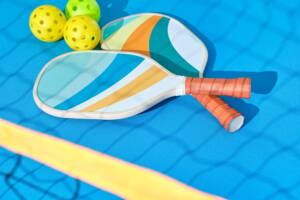
2. Why Play Pickleball?
-
- Easy to Learn: The rules are simple, and the slower ball speed compared to tennis makes it beginner-friendly.
-
- Low Impact: The smaller court size and underhand serve reduce stress on the joints, making it ideal for all ages and fitness levels.
-
- Social and Fun: Matches are often played in doubles, and it’s common to rotate partners and opponents, making it a social sport where you can meet new people.
-
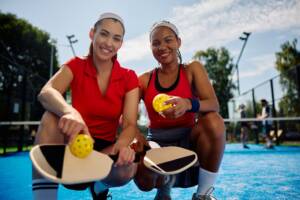
- Health Benefits: Pickleball improves cardiovascular health, coordination, balance, and agility. It’s also a great way to stay active and burn calories in a short amount of time.
- Health Benefits: Pickleball improves cardiovascular health, coordination, balance, and agility. It’s also a great way to stay active and burn calories in a short amount of time.
3. Equipment You Need
Before you start playing, you’ll need a few basic items:
-
- Pickleball Paddle:
-
- Paddles are usually made of composite, graphite, or wood materials.
-
- For beginners, a lightweight paddle (7.5–8.2 ounces) with a medium grip size (4⅛–4⅜ inches) provides a good balance of control and power.
-
- Pickleball Paddle:
-
- Pickleball Balls:
-
- Outdoor Balls have smaller holes and are slightly heavier to withstand wind.
-
- Indoor Balls have larger holes and are lighter for consistent bounce on gym floors.
-
- Choose based on where you plan to play.
-
- Pickleball Balls:
-
- Appropriate Footwear:
-
- Court shoes with non-marking soles provide stability and grip.
-
- Avoid running shoes, as they do not offer the lateral support needed for quick side-to-side movement.
-
- Appropriate Footwear:
-
- Comfortable Clothing:
-
- Moisture-wicking athletic wear helps you stay cool and comfortable while playing.
-
- Comfortable Clothing:
-
- Optional Accessories:
-
- Hat or Visor: For outdoor play to shield your eyes from the sun.
-
- Polarized Sunglasses: To help with visibility on bright days.
-
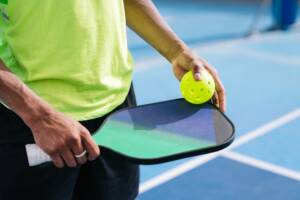
- Water Bottle: Stay hydrated during long matches or tournaments.
- Water Bottle: Stay hydrated during long matches or tournaments.
-
- Optional Accessories:
4. Understanding the Basic Rules
While pickleball rules can be detailed, here are the core concepts for beginners:
-
- Serving
-
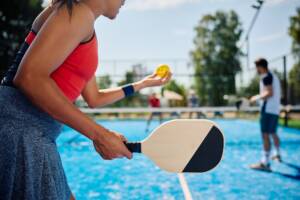
- Underhand Only: The serve must be underhand, with paddle contacting the ball below the waist.
-
- Foot Placement: Both feet must stay behind the baseline during the serve.
-
- Diagonal Serve: Serve diagonally crosscourt, landing in the opponent’s service zone (between the baseline and non-volley zone).
-
- Scope of Attempts: Only one serve attempt is allowed, except on let serves (when the ball hits the net and lands in the correct service box).
-
- Serving
-
- Double-Bounce Rule
-
- After the serve, each team must let the ball bounce once on their side before volleys are allowed.
-
- That means the receiving team lets the serve bounce first, and the serving team lets the return shot bounce before volleys begin.
-
- Double-Bounce Rule
-
- Non-Volley Zone (Kitchen)
-
- The 7-foot area on both sides of the net is called the “kitchen,” and volleying (hitting the ball in the air) is prohibited inside this zone.
-
- You can enter the kitchen to hit a ball that has bounced, but you must immediately step out before making a volley.
-
- Non-Volley Zone (Kitchen)
-
- Scoring
-
- Only the serving team can score points.
-
- Games are typically played to 11 points, win by 2. Tournament matches may play to 15 or 21 points.
-
- Scoring
-
- Faults
-
- Hitting the ball out of bounds.
-
- Failing to clear the net.
-
- Volleying the ball while standing in the non-volley zone.
-
- Violating the double-bounce rule.
-
- Faults
For a complete set of official rules, you can refer to the USA Pickleball Association website.
5. Finding a Court
-
- Local Recreation Centers and Parks: Many community centers and parks now have pickleball courts or multi-use courts with pickleball lines painted on them.
-
- Dedicated Pickleball Facilities: Some cities have dedicated pickleball clubs or facilities offering several courts, leagues, and clinics.
-
- Schools and Universities: Check with local schools, colleges, or universities; they often allow community access during non-school hours.
-
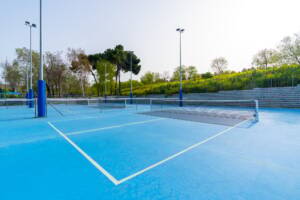
- Online Resources: Use websites or apps like “PicklePlay” or “Places 2 Play Pickleball” to locate courts near you and see current availability.
- Online Resources: Use websites or apps like “PicklePlay” or “Places 2 Play Pickleball” to locate courts near you and see current availability.
6. First Steps: Lessons and Clinics
-
- Beginner Clinics
-
- These group sessions are tailored for new players, teaching basic rules, strokes, and court positioning.
-
- Clinics offer hands-on instruction and an opportunity to ask an experienced coach or player questions.
-
- Beginner Clinics
-
- Private Lessons
-
- If you prefer one-on-one instruction, hiring an instructor can accelerate your learning by focusing on your specific strengths and weaknesses.
-
- Private Lessons
-
- Pickleball Camps
-
- Weekend or week-long camps often include drills, gameplay sessions, and social events, providing a deeper immersion into the game.
-
- Pickleball Camps
-
- YouTube Tutorials and Online Courses
-
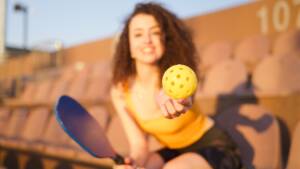
- Many experienced coaches offer free or paid instructional videos online that cover everything from basic fundamentals to advanced strategies.
- Many experienced coaches offer free or paid instructional videos online that cover everything from basic fundamentals to advanced strategies.
-
- YouTube Tutorials and Online Courses
7. Basic Techniques to Master
-
- Grip: Use the continental (hammer) grip—hold the paddle as if shaking hands. This grip allows for versatility in both forehand and backhand shots.
-
- Stance and Footwork: Stay on the balls of your feet, knees slightly bent, ready to move laterally or forward. Keep your paddle up and in front of you to react quickly.
-
- Serve and Return: Practice a consistent, controlled underhand serve. Return serves with a forehand or backhand groundstroke, ensuring the ball clears the net to start the rally.
-
- Dinking: Soft shots hit just over the net into the opponent’s kitchen area. Dinking is a key strategy to maintain control and force errors. Focus on control and placement over power.
-
- Volley: When at the kitchen or near the net, practice volleying—hitting the ball in the air without letting it bounce. Focus on stability, short compact swings, and watching the ball into the paddle.
-
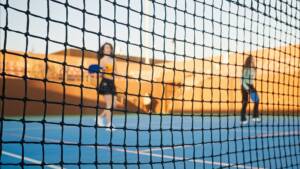
- Third Shot Drop: A soft, arcing shot from the baseline that drops into the kitchen, allowing you to approach the net safely. This shot neutralizes your opponent’s advantage by making them hit upward while you move forward.
- Third Shot Drop: A soft, arcing shot from the baseline that drops into the kitchen, allowing you to approach the net safely. This shot neutralizes your opponent’s advantage by making them hit upward while you move forward.
8. Etiquette and Sportsmanship
-
- Call Your Own Lines: In recreational play, players are responsible for making honest line calls. If you hear a call against you, accept it graciously.
-
- Wait for Opponents to be Ready: Before serving, ensure everyone is set and ready to play.
-
- Keep the Volume Reasonable: Avoid yelling or excessive celebrations; maintain a friendly, respectful atmosphere.
-
- Rotate Partners: In a social or “round-robin” setting, rotate partners and opponents so everyone gets a chance to play with different people.
-
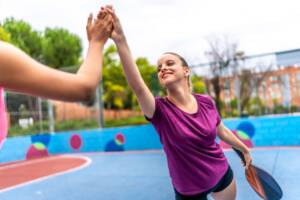
- Respect Court Time Limits: On busy days, many courts have posted time limits (usually one hour). Yield the court promptly when your time is up.
- Respect Court Time Limits: On busy days, many courts have posted time limits (usually one hour). Yield the court promptly when your time is up.
9. Tips for Improvement
-
- Practice Regularly: Consistency is key. Schedule practice sessions or join open-play times at your local facility.
-
- Play with Better Players: Challenge yourself by playing against more experienced players who can offer on-the-spot tips and help you elevate your game.
-
- Focus on Consistency Over Power: In the beginning, aim to keep the ball in play rather than hitting powerful shots that risk going out.
-
- Record Your Play: Video your matches or practice sessions to analyze your footwork, swing mechanics, and positioning.
-
- Warm-Up and Stretch: Prevent injuries by dynamically stretching before play and cooling down afterward.
-
- Set Realistic Goals: Aim to improve one aspect of your game each week—serve accuracy, footwork, or mastering a new shot like the dink or drive.

- Set Realistic Goals: Aim to improve one aspect of your game each week—serve accuracy, footwork, or mastering a new shot like the dink or drive.
10. Resources and Community
Pickleball Books: Consider titles such as “Pickleball Fundamentals” by Mary Littlewood and “Essential Beginner’s Guide to Playing Pickleball” by Sarah Ansboury for in-depth guidance.
USA Pickleball (usapickleball.org): Official rules, guidelines, and tournament information.
Local Clubs and Leagues: Joining a club can help you meet other players, participate in organized match play, and improve faster.
Online Forums and Groups: Facebook communities, Reddit’s r/pickleball, and other pickleball-specific forums offer discussions, tips, and local meetups.